Guide 01 • Florida Law & Permits
Florida Statute § 163.045: Ocala Tree Removal Permits Explained
Written by Marcus Sterling, ISA Certified Arborist #FL-6842A
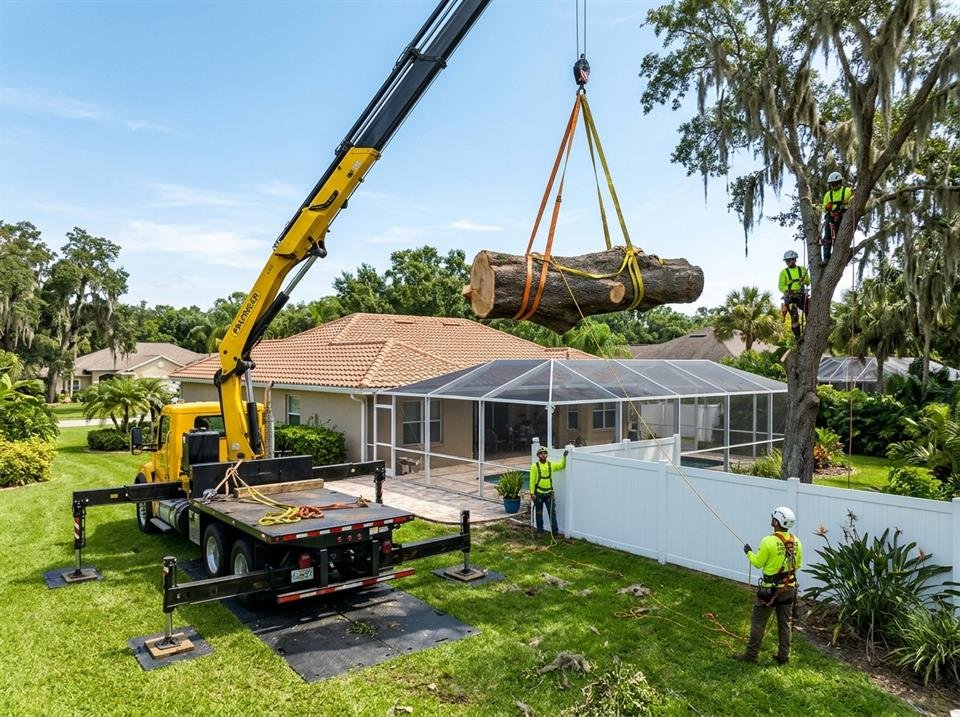
One of the most frequent questions Ocala homeowners ask before removing a declining oak or pine is whether they need permission from City of Ocala Growth Management or Marion County. Under Florida Statute § 163.045 (amended in 2022), a municipality or county cannot require a permit, notice, application, fee, or mitigation replanting for pruning, trimming, or removing a tree on residential property if the homeowner obtains documentation from an ISA Certified Arborist or Florida-licensed landscape architect stating the tree presents an unacceptable danger to persons or property.
- Applies to Residential Parcels: The property must be zoned for single-family residential use—commercial lots and new multi-lot subdivision developments still fall under City of Ocala Chapter 122 permitting.
- Must Be Verified Unacceptable Risk: Using the ISA Tree Risk Assessment Qualification (TRAQ) matrix, an arborist evaluates likelihood of failure, likelihood of impacting a target (home, driveway, power line), and severity of consequences.
- Preserve Before Removing: If a minor structural prune resolves the risk, Florida law expects honest assessment rather than automatic clear-cutting.
Learn About Hazardous Tree Removal →
Guide 02 • Arboricultural Diagnostics
5 Warning Signs a Marion County Laurel Oak Is Failing Internally
Unlike slow-growing Live Oaks (Quercus virginiana) that routinely survive 200+ years, Laurel Oaks (Quercus laurifolia) planted across Ocala neighborhoods in the 1960s and 1970s typically reach biological senescence between 50 and 70 years. Because their wood decays rapidly from the inside out, a canopy can still hold green leaves weeks before a trunk snaps.
- 1. Ganoderma Butt Rot Conks: Shelf-like reddish-brown or lacquered fungal brackets emerging along the lower trunk flare indicate advanced white rot digesting structural lignin.
- 2. Soil Uplift & Cracks Opposite a Lean: Saturated Candler and Arredondo sands lose shear friction during heavy rain; cracked or mounded turf behind a leaning oak signals active root plate heave.
- 3. Deep V-Shaped Co-Dominant Forks: Tightly pinched twin trunks trap bark inside the junction (included bark), acting like a wedge under gusting wind loads.
- 4. Vertical Frost/Lightning Seams & Sap Seepage: Longitudinal bark splits accompanied by dark wetwood weeping often point to severe internal decay hollowing.
- 5. Progressive Upper Crown Dieback: Dead twigs and leafless tips starting from the outer upper crown downward signal vascular starvation in the root zone.
Book a Hazardous Tree Assessment →
Guide 03 • Roof & Insurance
The 8–10 Foot Roof Clearance Rule for Florida Homeowners
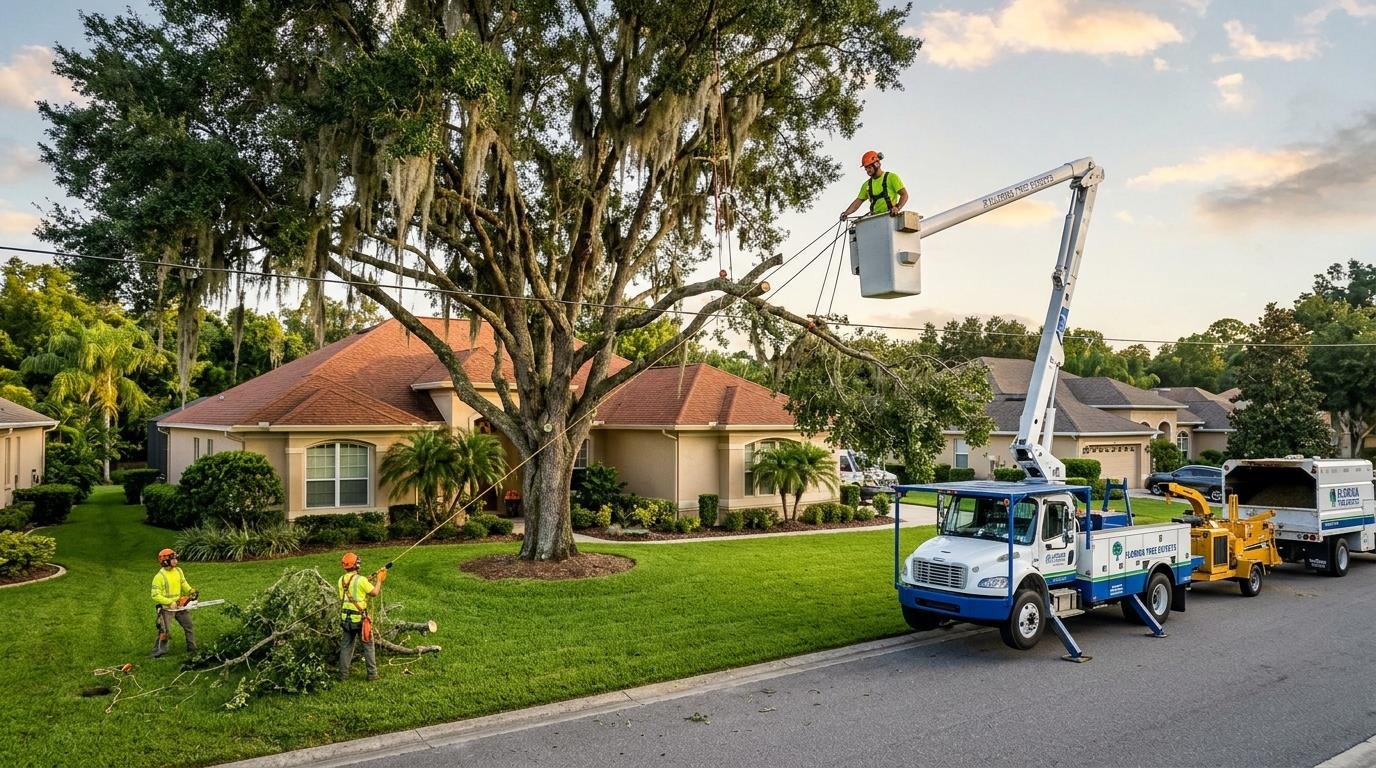
Property insurers across Marion County increasingly rely on aerial imagery and wind-mitigation inspections to flag overhanging oak and pine limbs. Branches sweeping within 3 feet of shingles grind away protective granules during afternoon squalls, trap damp leaf litter that causes wood fascia rot, and create easy attic entry bridges for roof rats and squirrels.
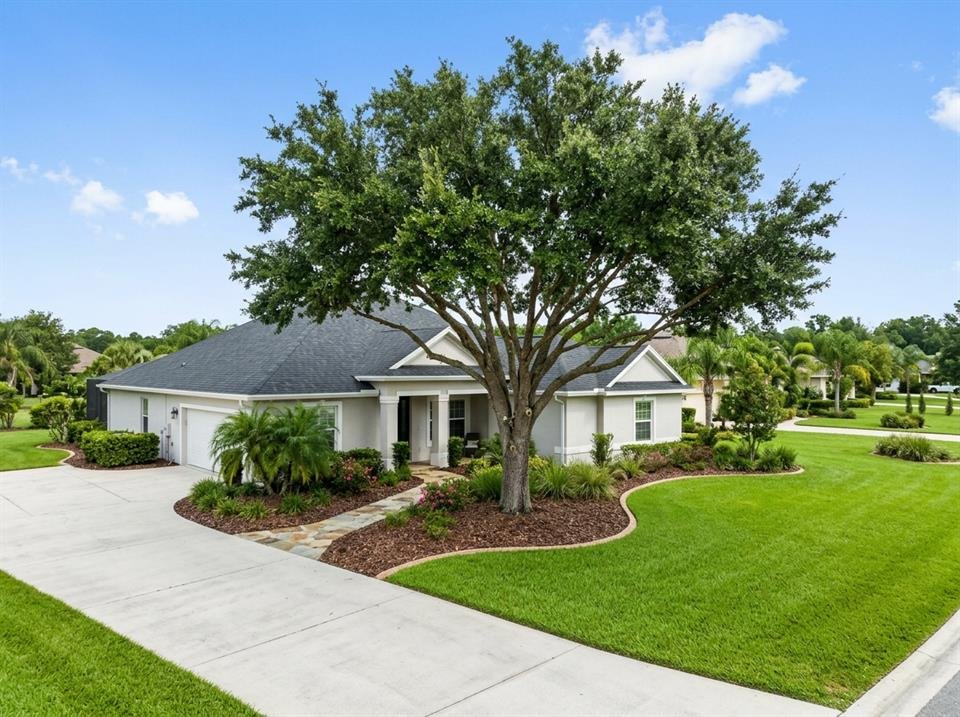
Following ANSI A300 selective crown lifting and tip weight reduction creates a clean 8 to 10-foot vertical and horizontal air buffer around your roof without disfiguring the tree or leaving dangerous flush-cut wounds.
Explore Roof Clearance Trimming →
Guide 04 • Stump Science
Why Old Stumps Attract Florida Termites
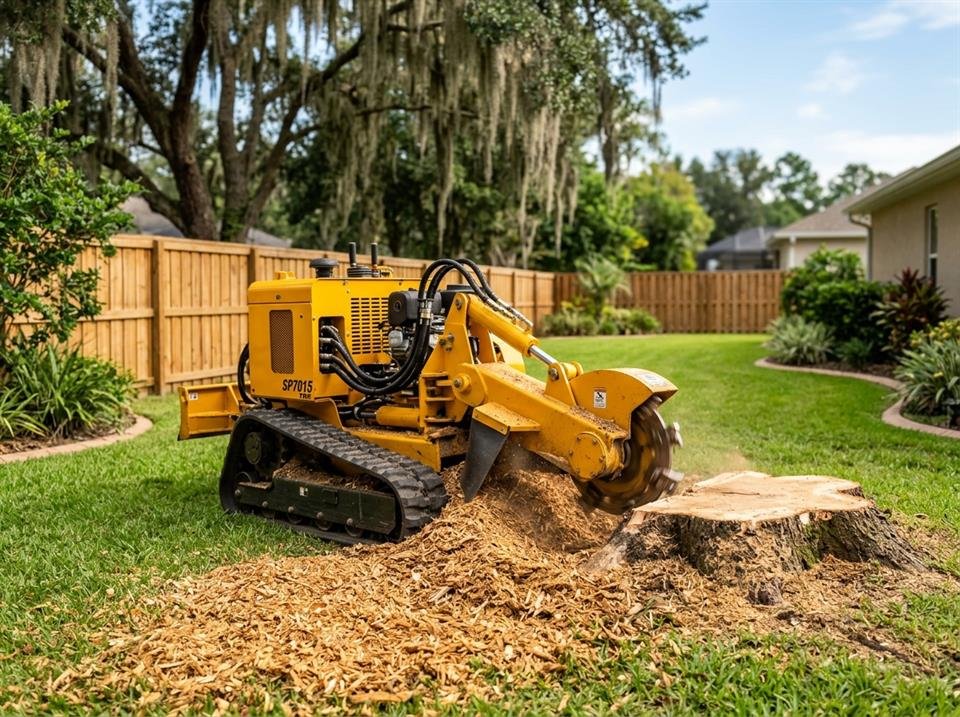
Decaying pine and oak stumps hold constant subterranean moisture, making them prime satellite nests for Reticulitermes termites and carpenter ants inches from home slabs. Grinding stumps 6–12 inches below grade removes the primary food source and stops Armillaria root-graft fungal spread.
Stump Grinding Guide →
Guide 05 • Storm Dynamics
Sand Pine Shear vs. Live Oak Leverage
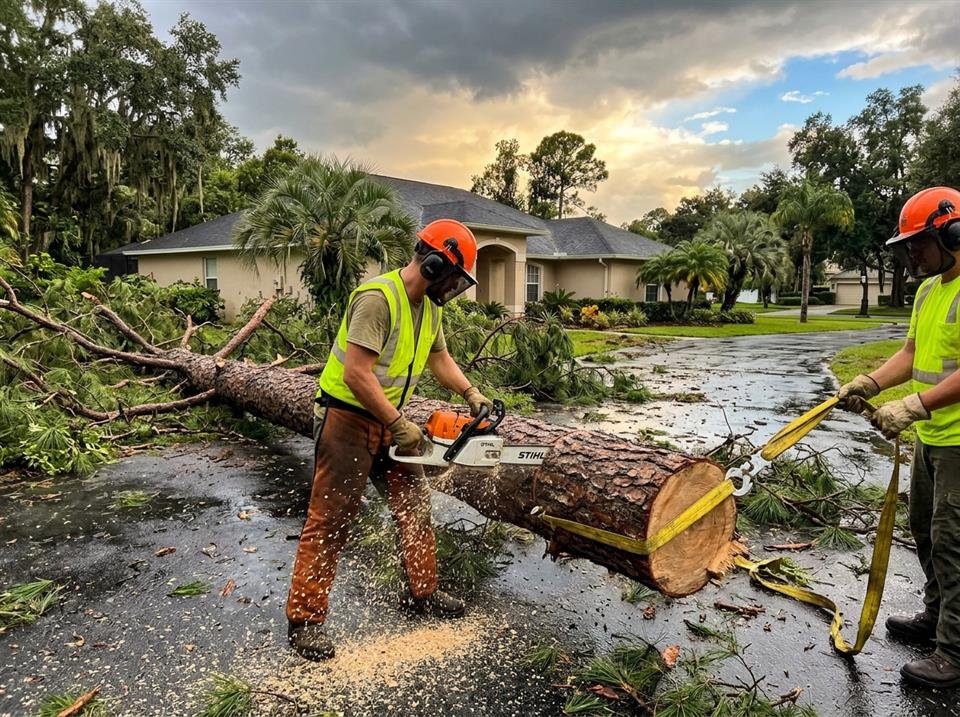
Upland Sand Pines growing near Silver Springs and Marion Oaks develop shallow roots over limestone hardpan and snap mid-trunk above 45 mph winds. Live Oaks hold roots firmer but drop heavy horizontal boughs if unthinned. Targeted crown thinning reduces wind-sail drag safely.
Storm Preparation →
Guide 06 • Acreage Clearing
Selective Forestry Mulching vs. Bulldozing on Marion County Land
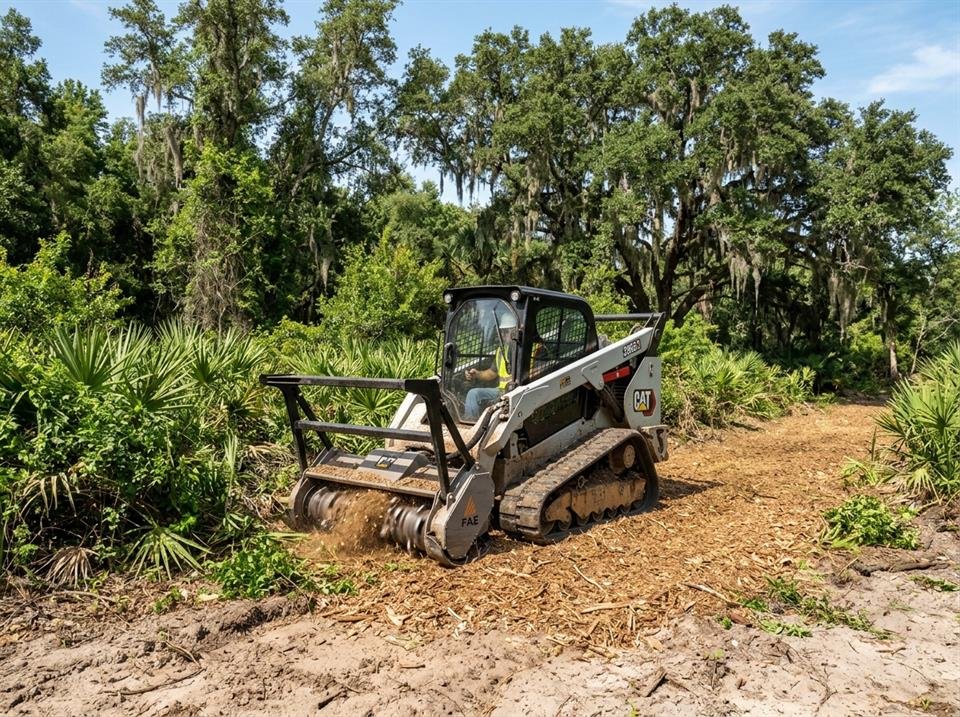
Traditional bulldozer land clearing scrapes away nutrient-rich organic topsoil, leaves massive burn piles, and crushes feeder roots of desirable Live Oaks you wanted to keep. Compact tracked forestry mulchers shred palmettos, wax myrtles, and invasive Brazilian pepper directly into moisture-retaining mulch right over sandy soil—preserving shade trees and reducing erosion.
Explore Land Clearing →